What a Capitoline Museums ticket actually gets you
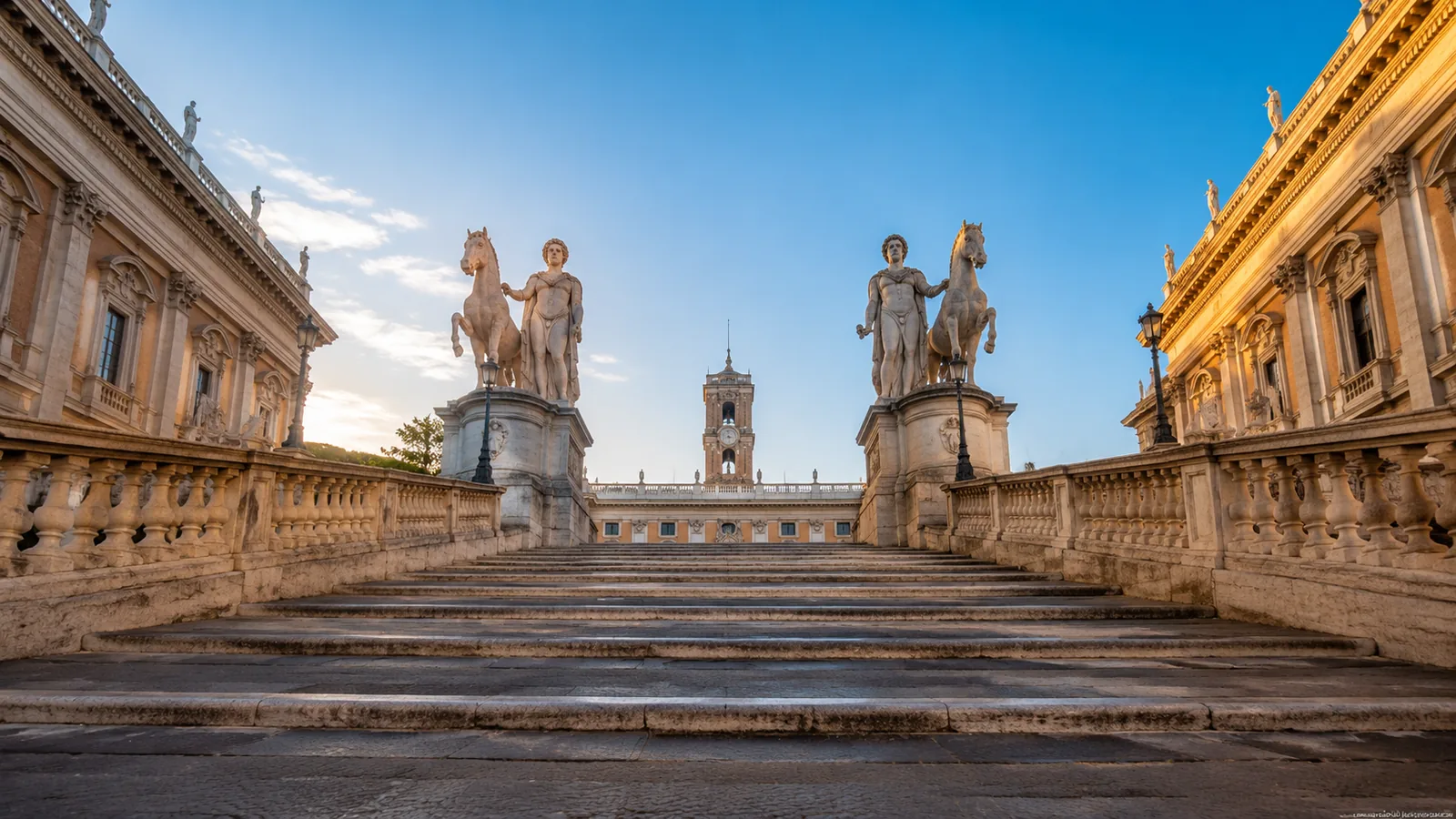
The short answer: one standard admission covers the whole museum — Palazzo dei Conservatori, Palazzo Nuovo, the underground Galleria Lapidaria and the Tabularium arcade looking over the Roman Forum. It does not cover Palazzo Senatorio, which is Rome’s City Hall and not a museum, and a temporary exhibition can carry a supplement on top. What separates one option from another is never the museum itself. It is what you attach to it: an audioguide, a briefing video, a bus ticket, a guide’s two and a half hours, a car to your hotel door.
Know which one you want? The live dates and the operator’s own price are one tap away.
Check dates & availability →Why there is no number on this page
I live under this hill and I have watched people arrive with a figure they read on a blog three years ago, then discover that the concession they were counting on has changed, or that the exhibition they wanted carries a supplement, or that the online booking fee exists. A stale number is worse than no number. So this site prints none, anywhere, and points you at the two places that are always current instead: the museum’s own ticketing system for the plain municipal ticket, and the booking panel further down this page for the operator products.
We don’t print prices — they change by date, season and group size, and a stale number helps nobody. The live price for the date you want is shown in the booking panel on this page, straight from GetYourGuide.
What is on the museum’s own ticket
The Musei Capitolini are a civic museum — Roma Capitale’s, run through the Sovrintendenza Capitolina — so the ticket is issued by the city, not by the state and not by the Vatican. One admission runs the full itinerary, and you cross from one palace to the other underground without going back out into the square. The layout page explains that crossing properly, because it is the part nobody expects.
Usually included
- Palazzo dei Conservatori: the courtyard with the colossal Constantine fragments, the Appartamento dei Conservatori, the Esedra di Marco Aurelio
- The Pinacoteca Capitolina upstairs, with both Caravaggios
- Palazzo Nuovo: the Dying Gaul, the Capitoline Venus, the Sala degli Imperatori
- The Galleria Lapidaria under the piazza and the Tabularium arcade over the Forum
- The Palazzo Caffarelli-Clementino sections, including the Medagliere
- Use of the self-managed cloakroom, included with admission
Not included
- Palazzo Senatorio — City Hall, visited only on separate free guided tours
- Temporary exhibitions in separately ticketed spaces, which may need a supplement
- Audioguides and videoguides, sold at the ticket desk
- The museum’s own paid app
- Any transport to the hill
What the operator products add, in kind
Everything on the booking panel here is the museum ticket plus something. It is worth being literal about what that something is, because “experience” is a word that hides a lot. All six have the same cancellation terms — free up to 24 hours before — and all six are compared side by side on the tickets hub.
- A briefing and a held slot. The multimedia product checks you in at the operator’s office on Piazza d’Aracoeli, runs a 25-minute video on ancient Rome, and then sends you in on a reserved entry time with the audioguide app. It is the most booked of the six, at 4.3 from 1,423 reviews, and it allows a three to five hour window rather than a fixed tour length.
- An audioguide and a hosted meeting point. Official entry plus a commentary in nine languages, about an hour and a half. It is the weakest-rated of the six at 3.9 across 42 reviews, and the complaints are about the meeting point and the audio delivery rather than about the museum — see the audioguide review page.
- A bus network. The hop-on hop-off combination pairs entry carrying a reservation with a 24-hour open bus ticket, sold with two-day validity. It rates 4.6, but from only nine reviews, so treat the rating as thin rather than proven.
- A guide, for two and a half hours. The private tour includes tickets, a guide, hotel pickup and drop-off and private transport, and it is the only perfect score in the set: 5.0 from 43 reviews. It makes no skip-the-line claim, and I am not going to make one for it. See private tours.
- An art historian. The timeless private tour is 2.5 hours with an art historian, entry, hotel pickup and skip-the-ticket-line entry, at 4.5 from 21 reviews. It is sold as private but the booking cap is twenty people, which is worth knowing before you picture a family group.
- Storytelling built for children. The Percy Jackson tour is a private mythology tour for up to four people with an interactive quest, 4.7 from 46 reviews. It works, and the reviews on the family page are unusually specific about why.
So what makes one option sit above another?
Four things, and none of them is the museum. A human being’s time is the big one: a guided two and a half hours is a different proposition from a printed ticket, and a private group is a different proposition again. A vehicle is the second. Third is a held entry time, which the operator arranges and the plain municipal ticket does not describe. Fourth is language coverage: the audioguide product runs to nine languages, the private ones to English and Italian.
If you want the leanest possible route in kind rather than in currency: buy the plain municipal ticket, skip the audioguide, and read the what to see page on the Cordonata on your way up. The bronzes do not need commentary. The Pinacoteca does, and that is the one place I would take a guide.
Who does not pay at all
Quite a few people, and more than most guides admit. Rome and Metropolitan City residents, students at universities in the metropolitan area, MIC card holders, children under six, visitors with a disability and one companion, and everyone on the first Sunday of the month. Roma Pass holders are covered for their first site or two depending on the pass. The categories are set out in full on who gets in free, and the two Rome cards have their own page at the Roma Pass and the MIC card. None of that needs an online booking: entitled visitors can phone the city line or simply turn up at the desk.
The difference that is worth more than any of it
Museum tickets bought in advance are non-refundable and non-modifiable. That is the museum’s own rule, in its own words. Every GetYourGuide product on this site cancels free up to 24 hours before it starts. If your Rome week is settled, that gap does not matter. If you are holding a Tuesday that might become a Thursday, it is the entire argument, and it has nothing to do with queues. Do you need to book ahead takes that apart properly.
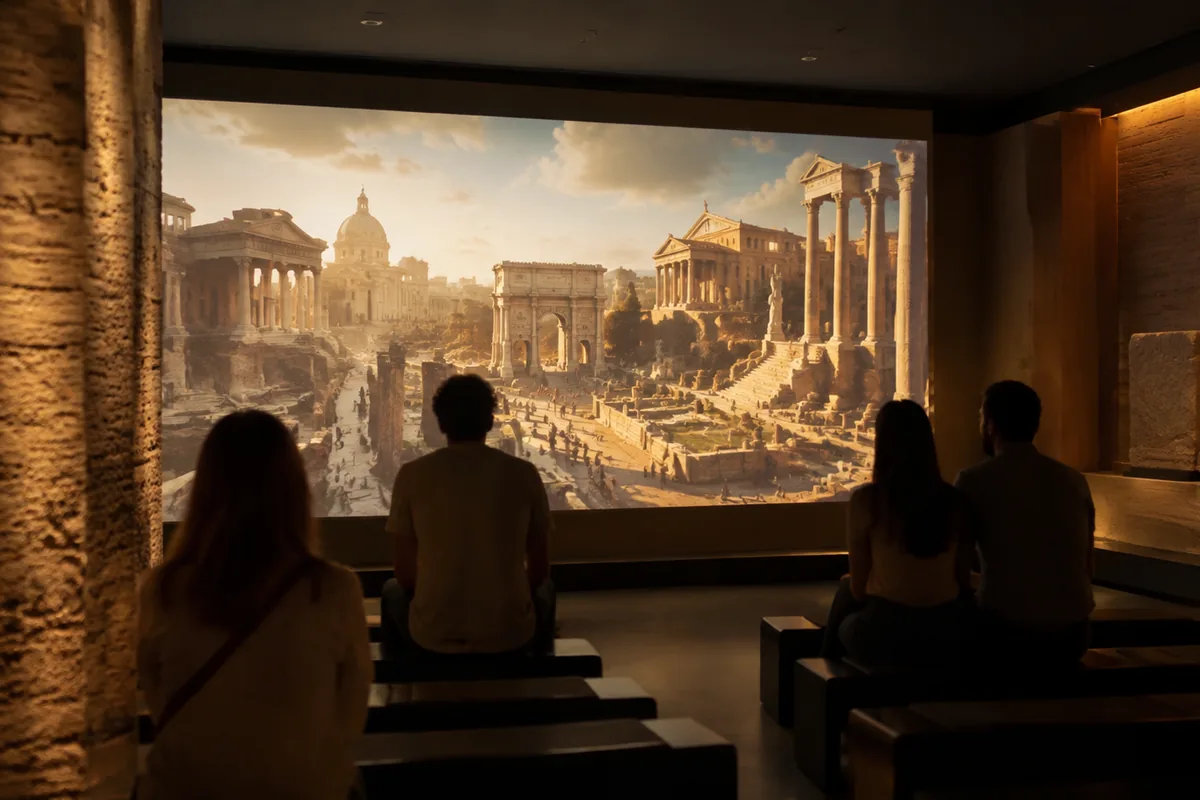 Most booked
Rome: Capitoline Museums Experience with Multimedia Video
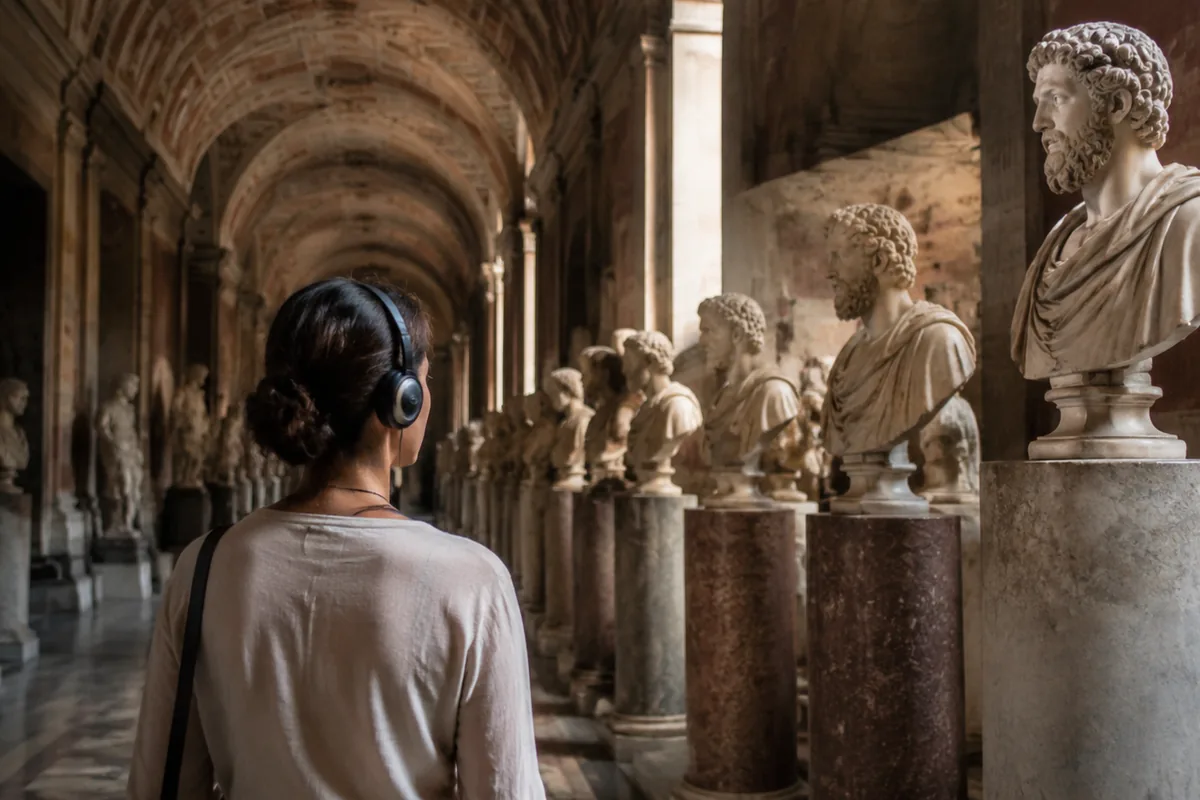 Ticket & audioguide
Rome: Capitoline Museums Experience Visit with Audioguide
 Ticket & bus
Rome: Capitoline Museums Ticket and Hop-on Hop-off Bus Tour
Frequently asked questions
What does a Capitoline Museums ticket include?
One admission to Palazzo dei Conservatori, Palazzo Nuovo, the Pinacoteca Capitolina, the Galleria Lapidaria and the Tabularium, with the cloakroom. Palazzo Senatorio is not included and separately ticketed exhibitions may carry a supplement. The layout page shows how the sections connect.
Is Centrale Montemartini on the same ticket?
Not on the standard one. The Capitolini Card is a combined ticket valid seven days across both the Musei Capitolini and Centrale Montemartini, and the multimedia product offers Montemartini as an add-on at booking. Watch the calendar: Montemartini closes on Mondays when the Capitoline is open. See adding Centrale Montemartini.
Is the audioguide included in the entry ticket?
No. Audioguides and videoguides are sold separately at the ticket desk, and the museum also publishes a paid app. Two of the operator products bundle a commentary instead — compare them on guided tours.
Where do I see the actual figure for a date?
In the booking panel on this page, which pulls live availability from GetYourGuide for the date you pick, and on the museum’s own ticketing system for the plain municipal ticket. This site prints no figures because they change and stale ones mislead.
Do temporary exhibitions need a supplement?
Sometimes. The museum sells cumulative tickets that combine admission with a concurrent exhibition, and supplements can be added online or settled at the desk on arrival. Free and reduced schemes do not apply in some exhibition spaces, so check the museum’s notices page before you plan around a particular show.