The Capitoline Museums: an honest guide to visiting
The Capitoline Museums sit on top of the Campidoglio, in three palaces around a square Michelangelo designed, and they hold the bronzes Rome has owned since 1471. They are open every day from 09:30 to 19:30, closed only on 1 May and 25 December, and they are the one major Roman collection where the queue is genuinely short. Plan on two to three hours.
Know which one you want? The live dates and the operator’s own price are one tap away.
Check dates & availability →I grew up in Rione Campitelli, the sliver of Rome that sits directly under the Capitoline hill, and I have been walking up the Cordonata since I was small enough to need a hand on it. I am not a guide, not a licensed operator and not an art historian. I simply got tired of watching people spend a morning in a queue at the Vatican while the best bronzes in the city sat ten minutes away with nobody in front of them.
The queue is short. That is the whole story
Almost everything sold about Roman museums is sold on fear: book now, sells out, beat the line. At the Capitoline that pitch is close to dishonest. The museum’s own position is that buying online is strongly recommended, not required, and walk-up tickets at the desk inside Palazzo dei Conservatori are almost always available. Set that against the Colosseum, where a timed reservation is compulsory and booking opens thirty days ahead, or the Galleria Borghese, where a booked slot is mandatory for every category of ticket including free entry for under-18s. The Capitoline asks nothing of your calendar. It opens every day of the year from 09:30 to 19:30, last admission 18:30, and closes on precisely two dates: 1 May and 25 December. It is open on Mondays, when a good deal of Rome is not, and on Sundays, when the Vatican Museums are shut. It is open on 1 January, from 11:00 to 20:00, whatever your guidebook prints — that correction alone is worth the opening-hours page.
So what does booking ahead actually buy?
Three things, and none of them is a place in a queue that does not exist. The first is a held slot: advance purchase is online-only, and the desk sells for today, not for Thursday. The second is whatever the operator has wrapped around the entry — a twenty-five minute film on ancient Rome before you climb the hill, an audioguide already on your phone instead of one you queue for once you are inside, a guide who can tell you which Caravaggio is which, or a bus ticket bolted on at checkout. The third is the one that actually decides it for most people: every option I list cancels free up to 24 hours before. The museum’s own pre-purchased ticket does not. It is non-refundable and non-modifiable, so a flight delay or a change of plan simply costs you the ticket. Book a week ahead for a city you have not reached yet and that matters far more than any queue would. The longer argument is on whether you need to book, and what “skip the line” is really selling you here is on the skip-the-line page.
What you are buying a ticket to
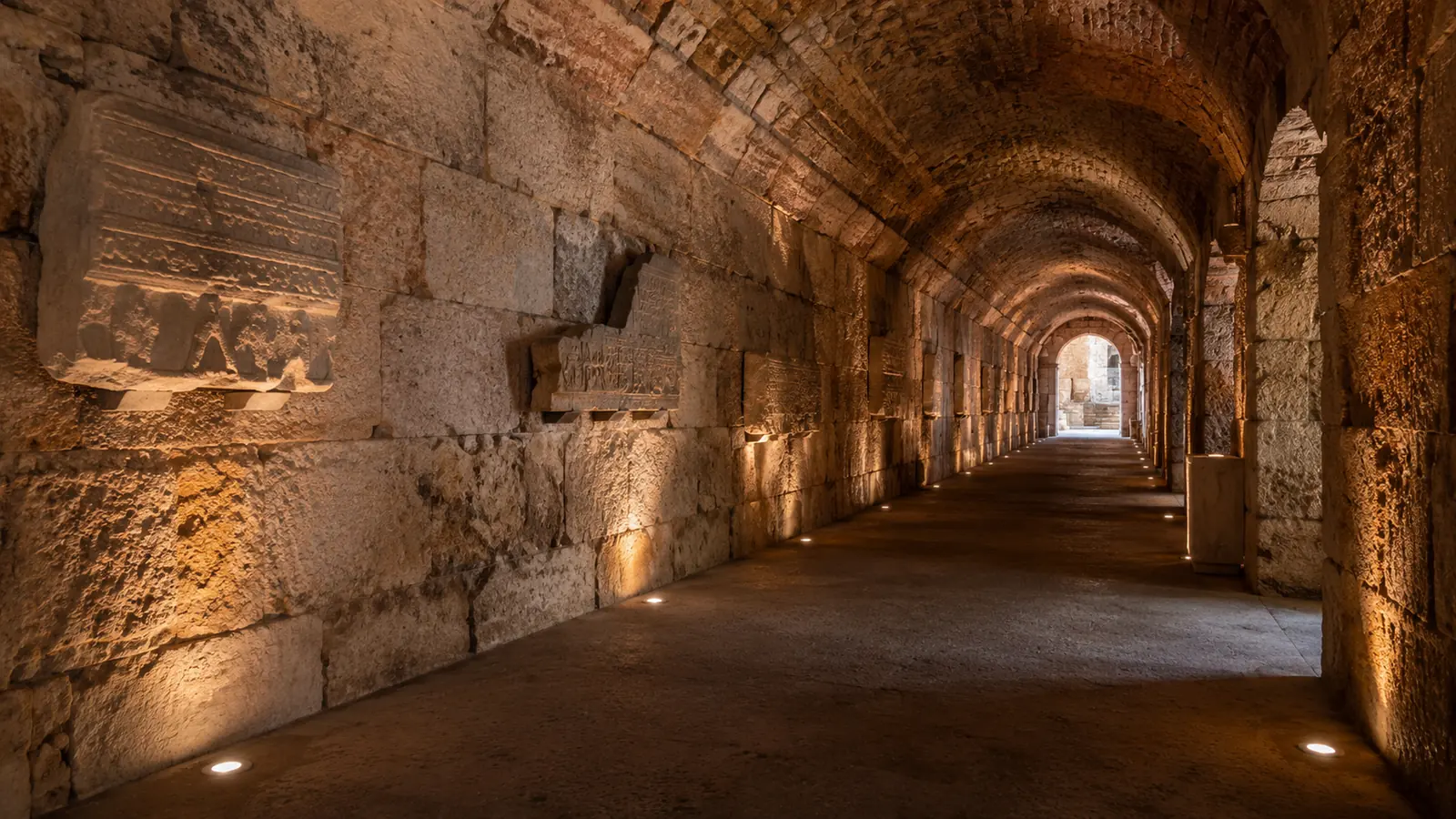
People arrive expecting one building. It is three. You enter through Palazzo dei Conservatori on the right-hand side of the square, and somewhere in the middle of the visit you go down under Piazza del Campidoglio through the Galleria Lapidaria, past roughly 1,400 ancient inscriptions, into the foundation chambers of the Tabularium — the Roman state archive, finished in 78 BC — and come out in an arcade of eleven bays looking straight along the Roman Forum. Then you surface inside Palazzo Nuovo without ever having crossed the square in the open. One admission covers all of it, plus the Palazzo Caffarelli-Clementino rooms. Palazzo Senatorio, the third palace on the square, is not in the museum: it is City Hall. The layout page lays that out properly, because the underground crossing is the part nobody tells you about and the part everyone remembers.
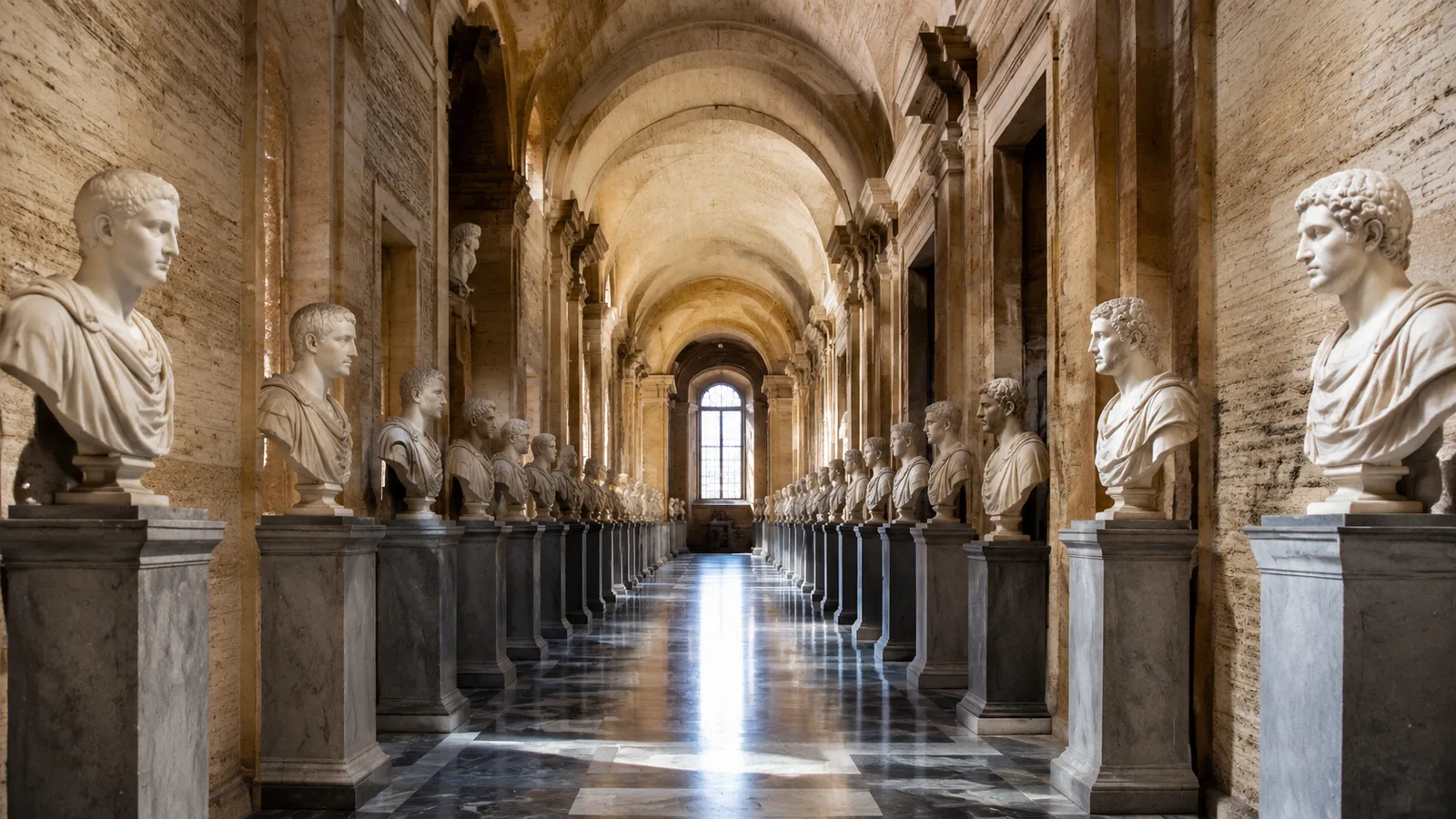
What is in it, briefly. The bronzes Sixtus IV gave back to the Roman people in 1471 — the She-Wolf, the Spinario, the Camillo, the Constantine fragments. The original equestrian Marcus Aurelius, indoors under glass since 1990; the one in the square is a replica put up in 1997. A colossal marble hand, 166 cm of it, in the courtyard. The Dying Gaul and the Capitoline Venus in Palazzo Nuovo, two Caravaggios upstairs. And a correction I enjoy: the museum still labels the She-Wolf as 5th century BC, while radiocarbon work at the University of Salento dated the bronze between AD 1021 and 1153. Room by room, if you want the order.
What I would not pretend about
The Pinacoteca is a real picture gallery with real pictures in it, and it is still a lesser gallery than the Borghese. If paintings are the reason you came to Rome, go there and come here second — I have set the two side by side. Individual rooms here close for maintenance for months at a stretch, so do not build a morning around one object without checking the museum’s notices first. And of the six products I list, the plain entry-with-audioguide sits at 3.9, the lowest of the set. The complaints are about the meeting point and how the audio reaches you, not about the museum — worth knowing before you book rather than after. All of that is on the reviews pages, ranked rather than smoothed over.
What I would tell a friend with one morning
Come on a weekday from opening. The quiet windows are the first hour and the last two on a Wednesday; the busy ones are weekend afternoons, high summer, and the first Sunday of the month, when entry is free for everyone and the hill knows it. Give it two to three hours — the timing page has the honest version, and the crowding page the rest. There is no dress code. The cloakroom is where your backpack and umbrella are going, so pack accordingly. Finish on the Terrazza Caffarelli, which has its own entrance off the Capitoline steps and needs no ticket at all. Then pick the version of the visit you actually want from the six on offer.
Ready to pick a ticket?
The booking panel below shows live dates for the most-booked option, the one that starts with a briefing on ancient Rome before you go in. If you would rather compare all six side by side first, every ticket and tour is here, and the reviews cover what each one is actually like.
Frequently asked questions
How much time is needed for the Capitoline Museums?
Two to three hours covers the collection at a comfortable pace. An hour and a half is enough if you only want the bronzes, the Marcus Aurelius in the Exedra and the Tabularium view over the Forum. The timing page breaks it down room by room.
Do you need to pre-book Capitoline Museums tickets?
No — walk-up tickets are almost always available, and the museum itself calls online purchase “strongly recommended” rather than required. The reason to book ahead is that the museum’s own pre-purchase cannot be refunded or changed, while an operator booking cancels free up to 24 hours out. More on that here.
Is the Capitoline Museum one building or several?
Three palaces — Palazzo dei Conservatori, Palazzo Nuovo and Palazzo Senatorio — on one ticket. You cross between the first two underground, through the Galleria Lapidaria and the Tabularium, and come out looking along the Roman Forum. The layout page maps it.
Is this the same as the Palatine Hill?
No. The Capitoline Hill is the small hill above Piazza Venezia with Michelangelo’s square on top; the Palatine is a different hill on the far side of the Forum, and it belongs to the Colosseum archaeological park ticket. The difference, explained.